
What to Look For When Designing Cereal Box Dimensions?
There’s something oddly satisfying about picking the perfect cereal box off the shelf. The crunch, the flavor, the nostalgia. The way it fits perfectly in your hand and stands tall (but not too tall) in your pantry.
That’s no accident.
Behind every great cereal box is a carefully thought-out design that balances branding, shelf appeal, functionality, and logistics.
So, if you’re diving into the delicious world of cereal packaging, getting the box dimensions right isn’t just a detail, it’s the whole bowl of oats.
Let’s crack into what really matters when you’re designing cereal box dimensions.
Are Cereal Box Dimensions Really Important?
Absolutely, they are.
Cereal box dimensions might seem like a small detail on the surface, but they play a huge role behind the scenes. A well-designed box showcases your brand’s personality while making sure the contents are snug, safe, and exactly where they should be.
When the box fits the product just right, it avoids unnecessary movement, wasted space, or awkward bulges that can turn shoppers off.
Plus, size consistency matters more than you’d think. It keeps your branding looking sharp and uniform across different variants or flavors, giving your product line a polished, professional edge on the shelf. And let’s not forget about space optimization. Smart dimensions can save you precious room during shipping and storage, which translates into real savings on logistics.
From the user’s perspective, the right dimensions also enhance their experience. A box that fits comfortably in their hands, stores easily in the pantry, and communicates information clearly at a glance? That’s packaging that works.
Standard Cereal Box Dimensions and Variations
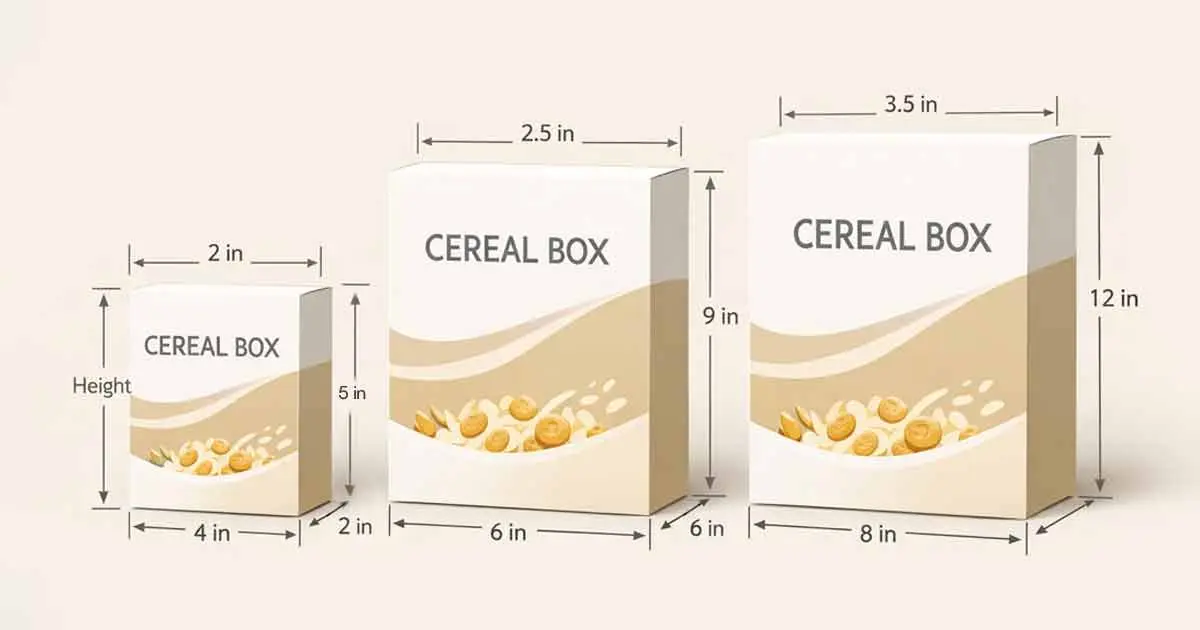
When it comes to cereal packaging, dimensions do a lot of heavy lifting. They influence everything from shelf presence to shipping efficiency, and yes, even how easily your cereal fits into a pantry. While there’s plenty of room for creativity, most brands work within a general size range that checks all the right boxes for retail and home use.
The standard cereal box dimensions usually fall between:
- Length: 20 to 30 cm
- Width: 7 to 8 cm
- Height: 30 to 35 cm
This size range hits the sweet spot. It offers enough space for branding and nutritional info, keeps the product secure, and works well in both store displays and household storage.
Beyond the standard size, there’s a whole lineup of box variations, each designed with a specific purpose in mind:
- Small single-serve boxes – Ideal for portion control, travel, or quick snacks. You’ll often find these in hotels, lunchboxes, and variety packs.
- Standard family-size boxes – The everyday go-to for most households, these are designed for regular pantry storage and weekly cereal needs.
- Large economy-size boxes – A favorite for bulk buyers and big families, these offer more cereal at a better value per serving.
- Limited-edition boxes – Often larger or uniquely shaped to feature special promotions, seasonal artwork, or collectible designs.
- Variety pack boxes – A bundled mix of mini-boxes that let customers sample multiple flavors without committing to a full-size box.
- Custom-shaped boxes – Designed to break the mold (literally), these creative formats make your brand pop on the shelf and boost perceived value.
- Compact storage boxes – Sleek and space-efficient, these boxes are perfect for urban kitchens or customers who prefer a clutter-free pantry.
- Bulk or wholesale boxes – Built for business use, these no-frills, large-capacity boxes are made for restaurants, cafeterias, or wholesale stores.
Each type serves a different purpose, but they all circle back to one thing: giving your product the best chance to stand out while staying practical. Smart dimension choices help you connect with customers, reduce waste, and make your packaging work harder without making it feel like hard work.
Impact of Cereal Box Dimensions
Cereal box dimensions might seem like a behind-the-scenes decision, but they can actually shape how your product performs from the factory floor to the breakfast table. From how it’s displayed in-store to how it stacks on a warehouse pallet, or even how easily someone grabs it during a busy grocery run, the size and shape of your box can affect every stage of its journey.
Portion Control
Box size has a subtle but powerful influence on how people perceive and manage their portions.
A larger box, for instance, often gives off the comforting illusion of abundance, like there’s more than enough to go around, even if the number of servings inside hasn’t changed much.
On the flip side, smaller boxes naturally suggest moderation and control. When dimensions align closely with actual serving sizes, it becomes easier for consumers to gauge how much they’re eating, helping them avoid those “oops, I just finished half the box” moments.
Shelf Display
Taller boxes tend to command more attention, especially at eye level, while broader faces offer more real estate for bold branding and irresistible product shots. But it’s not just about visibility, it’s about fit, too.
Retailers love packaging that plays nice with shelf space, stacking neatly without wasting a single centimeter. If your box is too bulky, it may end up awkwardly placed or tucked away. The goal? A design that grabs attention and earns its place on the shelf without hogging it.
Transportation and Storage
Cereal box dimensions can make or break the logistics game. When boxes are designed with transportation in mind, they’re easier to move, stack, and store this saving time, money, and a few headaches along the way.
A well-proportioned box maximizes space inside shipping cartons, allowing more units per pallet and fewer trips between warehouses and retail stores. That means lower shipping costs and a more efficient supply chain. Plus, stackable, space-smart packaging makes life easier in storage facilities.
Unboxing
The right box dimensions can elevate that moment from routine to rewarding. When the size feels just right, not too bulky, not oddly small, it sets the tone for a satisfying experience. There’s something undeniably pleasing about a box that’s easy to grip, opens without a wrestling match, and reveals its contents with zero fuss.
It creates a smooth first touchpoint with the product, which can subtly boost customer satisfaction.
Consumer Perception and Purchase Behaviour
When cereal boxes are sized and styled right, they immediately send a message of quality and care. Clean lines, balanced proportions, and a solid feel in hand can all signal that what’s inside is worth buying.
Compact packaging often gives off a sense of novelty or premium appeal, especially in a market crowded with oversized, overstuffed options.
More importantly, well-dimensioned packaging taps into buyer psychology: it feels deliberate, trustworthy, and designed with purpose. That subtle emotional nudge can be the difference between a casual glance and a confident toss into the shopping cart.
How To Choose The Right Height, Width, and Depth For Your Cereal Box
The dimensions you pick influence everything from how your cereal sits on a store shelf to how it feels in the hands of your customers. Here’s how to make sure your box hits all the right marks.
Start with your product volume. The amount of cereal you’re packing will naturally dictate the minimum space you need. You want a box that comfortably holds the contents without leaving too much empty space, which can make the product feel underwhelming or misleading. A snug fit not only protects the cereal from excessive movement and breakage but also gives a more premium feel.
Next, think shelf presence. Height helps you stand tall and get noticed, but if the box is too towering, it might not play well with standard shelf sizes. Width, on the other hand, gives you room to display bold visuals and branding elements.
Depth plays the quiet hero. It often goes unnoticed by shoppers, but it’s a big deal in terms of storage and stacking. Deeper boxes can sometimes be harder to fit in tight kitchen cabinets, but if done right, they can provide a sturdy, balanced structure and allow for more compact stacking during shipping.
Consider how it feels in the hand. Does the box grip easily? Is it too bulky for kids or too small for family-sized portions? Your target audience should guide some of these choices. A box meant for on-the-go snacking will look very different from one meant to last all week on a busy family’s breakfast table.
Factor in transportation and storage. Choosing dimensions that maximize the number of units per carton or pallet can save money over time and reduce your environmental footprint.
And finally, align it with your brand identity. Are you aiming for sleek and modern? Traditional and trustworthy? Fun and quirky? The size and shape of your packaging should reflect that. Smaller, compact boxes often feel innovative or health-conscious. Larger boxes might emphasize value or abundance.
There’s no universal formula, but striking the right balance between visual impact, practicality, and brand storytelling is key.
Factors To Consider When Choosing Dimensions For a Cereal Box
Before anything else, start with what’s going inside the box.
The type of cereal, whether it’s light and airy flakes, chunky granola clusters, or individually wrapped servings, affects how much space you need. You want a box that holds the right amount without an excessively empty room. Too much air space can make the product feel like a letdown, while overstuffing can risk damage and awkward bulges. Getting the volume-to-box ratio right creates a sense of balance and quality.
Target Audience
Who’s buying your cereal? Kids? Health-conscious adults? Busy families? Your audience should guide both the size and usability of the box. A family-size box should feel sturdy, generous, and easy to store, while a single-serve or on-the-go option should be compact, lightweight, and easy to toss into a bag. Dimensions should make the product feel tailor-made for the person buying it.
Shelf Display Requirements
Retailers love packaging that fits neatly and makes smart use of shelf space. If your box is too wide or too tall, it may not get optimal placement, or worse, it could be sidelined. Well-proportioned boxes are easier to stock, align better with planograms (those retail shelf layouts stores follow), and allow more units to be displayed at once. A smartly-sized box can help your cereal stand front and center, not somewhere down by the dusty floor tiles.
Shipping and Storage Efficiency
The logistics side of packaging can’t be overlooked. Every extra centimeter adds up when you’re moving thousands of units. Boxes that stack efficiently and fit neatly into cartons or pallets cut down on transportation costs and warehouse space. Choosing dimensions that optimize space during shipping not only saves moneyit, also helps reduce environmental impact.
Packaging Materials and Strength
The dimensions you choose will influence the materials required and how the box holds up under pressure. A wider or taller box might need reinforced sides to maintain shape and avoid collapsing. On the flip side, overly compact boxes with sharp corners can look sleek but may crush more easily during transport. The structure should match the material’s strength for durability and visual appeal.
Brand Identity and Shelf Appeal
Box dimensions are part of your visual identity. Sleek, narrow boxes can feel modern and health-conscious, while wider, bolder shapes may convey indulgence or value. The size of the box becomes part of your brand’s personality, don’t just follow what everyone else is doing. Make choices that reflect who you are and who your customer is.
User Experience
A box that’s awkward to open or doesn’t fit easily in the pantry can frustrate customers. Think about how your product will be used. Can a child open it easily? Does it reseal well? Does it sit nicely in a standard kitchen cabinet? The box should feel intuitive and pleasant to use from first tear to last pour.
Environmental Considerations
More brands today are aiming for sustainability, and rightfully so. Choosing dimensions that minimize excess packaging helps cut down on waste. Smaller, right-sized boxes reduce material usage and make recycling easier. And since efficient packaging also means more product per shipment, it’s a win for the planet and your bottom line.
In a Nutshell
Cereal box dimensions aren’t just about fitting flakes in a box, they shape how your product is seen, stored, shipped, and ultimately, enjoyed. From boosting shelf appeal to cutting logistics costs, the right height, width, and depth can do a lot more than you’d think. When chosen thoughtfully, your packaging becomes a powerful part of the brand experience—and that’s something worth every centimeter.
FAQs
Is material efficiency important when it comes to cereal box packaging?
Yes, it’s crucial. Material-efficient packaging reduces waste, cuts production and shipping costs, and supports eco-friendly branding.
What is the average size of a cereal box?
Most standard cereal boxes measure around 20–30 cm in length, 7–8 cm in width, and 30–35 cm in height, depending on the brand and serving size.
What is the average weight of the cereal?
The average box of cereal weighs between 350 to 500 grams (about 12 to 18 ounces), though weight varies based on the type and density of the cereal.
How big is a box of cereal?
A typical box is designed to hold enough cereal for 8 to 12 servings, with a size that’s easy to stack, store, and handle roughly the size of a large hardcover book.
How many ounces are there in a standard cereal box?
A standard cereal box usually contains about 12 ounces of cereal, but family-sized or economy boxes can range from 16 to 24 ounces or more.

Jennifer James
My specialty is developing cost-effective, attractive, and appropriate packaging for protecting products. I am working with the company to design custom packaging that meets the client’s requirements.
3 Responses