
Dimensions of a Water Bottle Label
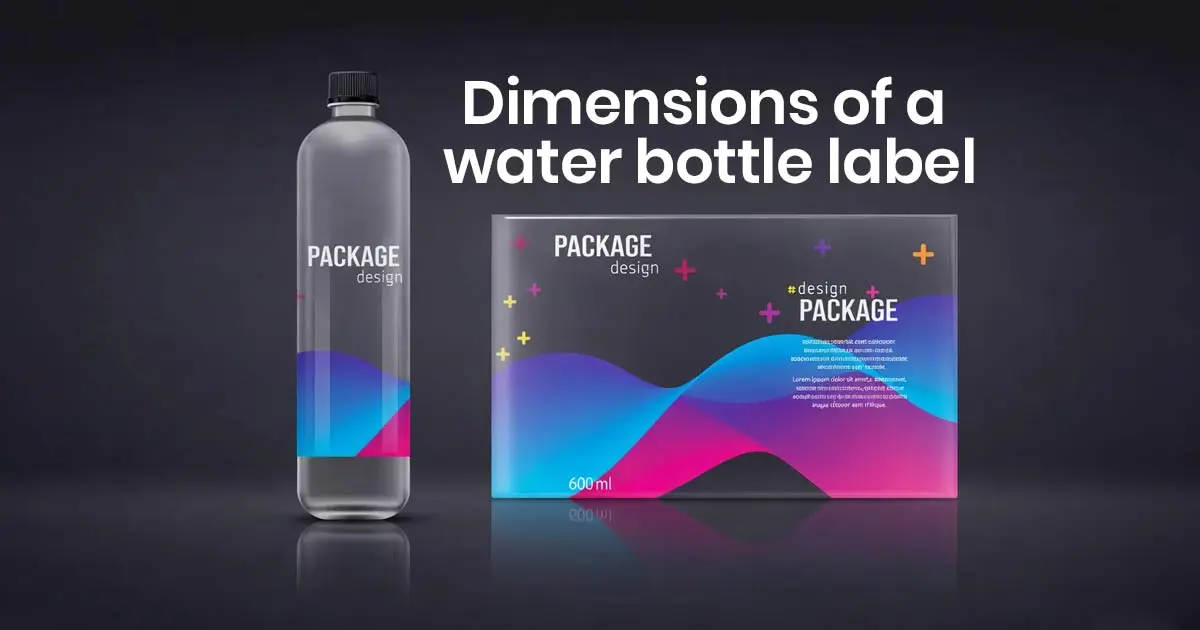
Have you ever grabbed a water bottle off the shelf and thought, “Who decided how this label should fit?” Probably not but that little rectangle of paper or plastic is more than just a space for logos and ingredients.
Believe it or not, the dimensions of a water bottle label aren’t random. They’re a tiny yet mighty part of the packaging world that can make or break a product’s shelf appeal.
Are Dimensions of Water Bottle Label Really Improtant?
The dimensions of a water bottle label are far more than a design detail.
A label that’s too small may leave essential information unreadable, while one that’s too large can wrinkle, peel, or fail to fit the bottle properly, giving the product an unprofessional look. The right dimensions ensure the label wraps seamlessly around the bottle, maintaining its shape and adhesion even when exposed to moisture or temperature changes.
From a marketing perspective, label size affects visibility on the shelf and the impact of your branding elements, such as logos, colors, and messaging. It also dictates how much regulatory information, like nutrition facts and barcodes, can be included without overcrowding the design. In short, choosing the correct label dimensions is a balance of aesthetics, practicality, and compliance.
Dimensions of a Water Bottle Label
Different bottle shapes and volumes ask for different approaches.
Cylindrical bottles (the classic 16.9 oz / 500 ml)
The most common consumer water bottle is cylindrical. For full wrap-around (“full body”) labels designers commonly use around 8″ wide × 2″ high (≈ 203 × 51 mm) for a 500–600 ml bottle. More manufacturer-specific templates give slightly different heights/widths, for example, many suppliers list ~8.062″ × 2.125″ as a safe print size for standard 16.9 oz bottles. These widths allow the label to wrap completely with a small seam/overlap for glue.
Smaller cylinders (330 ml / 12 oz)
Smaller bottles (like 330 ml) need proportionally narrower labels. Common finished sizes are around 200 × 60 mm (≈ 7.9″ × 2.36″) or label templates in that neighbourhood, check your bottle supplier’s template for exact cut lines. The shorter circumference means less printable width; many printers publish finished-size PDFs for these bottles.
Larger cylinders (750 ml, 1 L and above)
Larger bottles have greater circumferences and sometimes taller label panels. Typical full wrap sizes scale up, for example 9–9.5″ wide and 2.75–3″ high is common for 750–1000 ml depending on bottle taper and shoulder. Always confirm with the exact bottle model because taper near the shoulder can force a shorter usable height.
Square / flat-sided bottles
You can use front-facing panel labels (single flat panel) or wrap labels that cover multiple faces. Typical front-panel sizes for 500 ml square bottles are often around 4″ × 4″ (≈ 100 × 100 mm) for a centered, bold look; wrap labels for square bottles are commonly 8″ × 2″ if you want a narrow band that crosses faces. Because the panel is flat, barcodes and nutrition panels are easier to place and scan.
Slim / tall and promotional bottles
Slim bottles (skinny, taller cylinders) often use 8″ × 1.75–2″ finished labels, slightly taller bottles sometimes take narrower height but same circumference as standard bottles. Promotional or boutique bottles (glass, decorative) often require custom die-cut or two-piece labels to suit shoulders and curves.
Sports bottles and contoured/curved bottles
Sport/contour bottles (ergonomic curves, indents) cannot use a full flat wrap without distortion. Approaches:
- Use partial wrap labels sized to sit on the largest smooth area (dimensions vary wildly; measure the flat area).
- Use shrink sleeve labels (full-body heat-shrink film) if you want 360° coverage that conforms to curves.
Sports bottles usually need custom templates from the bottle maker because standard rectangular labels may wrinkle around contours.
Specialty shapes (flasks, embossed bottles, designer glass)
Unique shapes almost always require custom templates. Many packaging blogs report common starting points (e.g., front labels ~4×4 inches for flat-front flasks), but the only reliable method is templating the physical bottle or using the manufacturer’s dieline.
How To Decide The Perfect Bottle Label Fit?
A label that fits well enhances your brand’s image, ensures durability, and makes your product stand out on the shelf. Here’s how to get it right:
Measure the Bottle Accurately
Start by measuring the circumference and label panel height (the flat area between the bottle’s shoulder and base curve). For a cylindrical bottle, wrap a flexible tape measure around the widest part to find the width of your label. Avoid the curved shoulder or base areas to prevent wrinkling.
Match Label Type to Bottle Shape
- Cylindrical bottles: Use wrap-around labels for full 360° coverage.
Square or flat bottles: Opt for front-and-back or panel labels for clean alignment. - Curved or contoured bottles: Consider shrink sleeve labels, which conform perfectly to unique shapes without bubbling or lifting.
Factor in Overlap and Bleed
Most wrap-around labels need a 2–5 mm overlap for adhesion and about 3 mm bleed for printing accuracy. This ensures your design extends to the edge after trimming and fits smoothly without visible seams.
Choose the Right Material
For water bottles, waterproof or weather-resistant materials like BOPP (biaxially oriented polypropylene) are industry standards. They resist condensation and maintain print quality even when chilled.
Test Before Printing in Bulk
Always print a sample and wrap it around an actual bottle. This helps identify alignment or sizing issues before mass production.
Materials/Finishes To Enhance The Appeal of Your Label
The material and finish of your water bottle label can completely transform how your product looks and feels. Beyond holding your logo and text, the label surface communicates quality, durability, and brand personality. Here are some of the most popular and effective options:
Paper Labels
A cost-effective classic, paper labels are perfect for indoor use and short-term products. They’re easy to print on, offer vibrant color reproduction, and work well for eco-friendly or artisanal brands. However, they’re not ideal for moisture-prone environments unless coated or laminated.
Vinyl Labels
Vinyl is a durable, waterproof material that resists tears, fading, and moisture making it ideal for water bottles. Its flexibility allows it to conform to curves and contours without wrinkling, ensuring a professional finish.
Clear (Transparent) Labels
Clear labels create a sleek “no-label look,” allowing the bottle’s color or contents to show through. This minimalist style works beautifully for premium water brands and modern aesthetics. Choose clear BOPP (polypropylene) for water resistance and clarity.
Foil Labels
Metallic foil finishes, gold, silver, or holographic, instantly elevate a product’s luxury factor. They catch light and attention, perfect for premium or limited-edition bottled water lines.
Matte or Gloss Finishes
A matte finish gives a sophisticated, soft-touch appearance that feels high-end and minimizes glare. A gloss finish, on the other hand, enhances colors and creates a vibrant, polished shine.
Sustainable Materials
Eco-conscious brands can opt for recycled paper, biodegradable films, or plant-based plastics, a growing trend among bottled water companies looking to reduce environmental impact.
Other Tips To Keep in Mind When Designing a Water Bottle Label
A well-designed label tells your brand story, attracts attention, and survives every splash and chill. Here are some key tips to keep in mind:
- Tailor your design to the people buying your product. A minimalist design suits premium or eco brands, while bold colors and playful fonts attract younger consumers.
- Keep fonts legible and make sure essential details, brand name, volume, and ingredients, stand out clearly. Avoid cluttering the layout.
- Check labeling regulations for nutrition facts, barcodes, and recycling information. Design around these elements without compromising aesthetics.
- Strong contrast improves visibility on crowded shelves and ensures text remains clear even when condensation forms.
- Print a sample, wrap it around your bottle, and check for alignment, readability, and visual appeal under different lighting.
- Colors, fonts, and tone should match your overall brand identity to strengthen recognition and trust.
Mistakes To Avoid With Water Bottle Labels
Even the most creative label designs can fall flat if a few key details are overlooked. Avoiding common mistakes can save you time, money, and frustration while ensuring your water bottle label looks as good on the shelf as it does in your design file.
- One of the biggest errors is using the wrong label size. Always measure your bottle’s flat surface and confirm dimensions with your printer or supplier before production.
- Applying a flat label to a curved or contoured surface can lead to wrinkles or bubbling. Choose label shapes and materials that suit your bottle’s design.
- Too much text or imagery makes your label hard to read. Keep it clean, with clear hierarchy and white space.
- Using paper labels on bottles exposed to moisture or cold can lead to peeling. Opt for waterproof or weather-resistant materials.
- Blurry graphics or faded colors instantly reduce perceived quality. Use high-resolution images and professional printing services.
- Always print and test your label before mass production to catch errors in alignment, sizing, or text.
In a Nutshell
In a nutshell, your water bottle label is more than decoration, it’s your brand’s handshake with the world. The right size, material, and design choices reflect care, quality, and identity. When every detail fits perfectly, your label doesn’t just stick, it speaks, turning a simple bottle of water into a memorable brand experience.
FAQs
1. What is the standard label size for a 16.9 oz / 500 ml water bottle?
A common wrap-around label size for a 500 ml cylindrical bottle is approximately 8” × 2” (≈ 203 × 51 mm). However, variations exist depending on bottle design and supplier templates, always double-check your bottle’s dieline or template.
2. Can I use clear (transparent) labels on curved or contoured water bottles?
Yes, clear BOPP or vinyl films can work well, giving a “no-label look.” But for curved or contoured bottles, you need to ensure the label material is flexible and that your artwork accounts for distortions. Sometimes shrink-sleeve films are a better choice for full-body coverage without wrinkling.
3. How much bleed or overlap do I need for printing wrap around water bottle labels?
A typical bleed is about 3 mm (≈ 0.12″) around the label edges to allow for trimming inaccuracies. Overlap (seam allowance) for wrap-around glue is usually 2–5 mm so the label edge adheres properly without peeling. (This is a common guideline among label / printing specs.)
4. Which materials resist moisture or condensation when using water bottle labels?
Materials like vinyl, BOPP (biaxially-oriented polypropylene), or polyethylene films are commonly used because they’re waterproof, resistant to wear & tear, and better suited for chilled or wet bottles. Paper labels may require lamination or coating if exposed to moisture.
5. How do I find or create a print-ready template for my bottle label design?
Start by asking your bottle manufacturer or label printer for their dieline or template in AI / PDF format. Many label suppliers (like Avery) offer downloadable templates for popular bottle sizes. Adjust your design to include bleed, safe-zone margins, and account for label overlap or seams. Using a correct template ensures alignment, compliance, and professional results.

Jennifer James
My specialty is developing cost-effective, attractive, and appropriate packaging for protecting products. I am working with the company to design custom packaging that meets the client’s requirements.
18 Responses